Grading the Buffalo Nickel (Indian Head Nickel)
The Buffalo nickel (1913-1938) shows a Native American on one side and an American bison on the other. To grade it, look first at the bison's horn (it wears and strikes weakly), then the hair and cheekbone. The date sits on a high point and often wears completely away, so 'dateless' Buffalos are common. Watch out for the famous 1937-D 3-Legged and 1918/7-D, both heavily faked.
Last reviewed: · Free to read · Every claim sourced
New to grading? Start with how to grade a coin, step by step, and the Sheldon 1-70 scale.
At a glance
| Years | 1913-1938 |
|---|---|
| Designer | James Earle Fraser. |
| Denomination | Five cents |
| Specifications | Weight 5.00 g; diameter 21.2 mm; plain edge. |
Composition over time
| Period | Composition |
|---|---|
| 1913-1938 | 75% copper, 25% nickel |
Major subtypes
| Subtype | Years |
|---|---|
| Type 1 (raised mound) | 1913 |
| Type 2 (recessed FIVE CENTS) | 1913-1938 |
Where wear shows first
- Reverse: the bison's horn, the single most-watched grading element, plus head, shoulder, hip, and tail
- Obverse: the Native American's cheekbone and hair (braid)
Common weak-strike areas
- Date, the braid, and the bison's head/shoulder/tail; the horn is frequently incomplete even on Mint State coins
- Denver and San Francisco coins of 1917-1927 are notoriously weakly struck
Strike designations
Neither PCGS nor NGC awards a strike designation for the series; there is no 'Full Horn' label. Sharply struck examples simply sell for premiums, and the horn check described below is a wear gauge, not a designation.
Grading circulated coins
The bison's horn is the classic gauge, with one warning: the date, struck in high relief, is always the first casualty, and dateless coins are worth little regardless of other detail. Good (G-4): the horn is gone except perhaps a stub at its base, the bison and Indian are bold outlines, LIBERTY blends into the rim, and the date is readable but blurry. Very Good (VG-8): hints of the horn reappear, all four digits of the date show though flat, and the base of the tail becomes visible. Fine (F-12): about half the horn shows from the base up, the date is reasonably clear, the tail is visible, and LIBERTY stands clear of the rim. Very Fine (VF-20): roughly three-quarters of the horn shows and the tail is full. Extremely Fine (EF-40): the horn is finally complete including the tip, though its surface is still flat, and LIBERTY and the date are bold. About Uncirculated (AU-50): horn and tail are bold, with just a touch of friction on the highest fur of the bison's head and hip and on the Indian's cheekbone and hair ribbon. Two caveats: older dealer shorthand sometimes calls any full-horn coin Fine, but modern photo-matched standards reserve the complete horn for EF, the reading we use here; and 1920s branch-mint issues (the 1926-D especially) were struck so poorly that a Mint State coin can lack a full horn, so on those dates grade by luster, not the horn.
Grading Mint State coins
Mint State Buffaloes are separated by luster, strike, and marks on the Indian's cheek and the bison's shoulder and flank, with strike doing the heavy lifting: branch-mint issues of the 1920s are often miserably struck even in gem. A sharp horn, split tail, and full LIBERTY bring real market premiums within the same numeric grade.
Key dates
- 1913-S Type 2, the low-mintage (1.2 million) first-year key struck after the reverse mound was flattened
- 1918/7-D, the great Buffalo overdate, rare in all grades and extremely rare with a full horn
- 1926-S, the lowest mintage of the series (970,000) and a condition rarity in gem
- 1937-D 'Three-Legged', the famous polished-die variety missing the bison's foreleg; authenticate by the raised 'stream' under the belly and the moth-eaten look of the leg stub
- 1921-S, a low-mintage semi-key that circulated hard and is very scarce in Fine and better
Semi-key dates
- 1924-S, scarce with a readable date and rare with a full horn
- 1913-D Type 2, the tougher first-year branch-mint issue
Major varieties
- 1916 Doubled Die Obverse, a dramatic and rare doubled date
- 1918/7-D overdate
- 1937-D 3-Legged (also listed under key dates)
- 1938-D/S, the first overmintmark variety discovered in U.S. coinage
- 1935 Doubled Die Reverse, with doubling in FIVE CENTS
Common problems
- 'Dateless' coins: the date sits on a high point and wears away, producing very common dateless examples
- Acid-restored dates (e.g., Nic-A-Date) leave an etched, damaged surface, treated as damage
Counterfeit & alteration risks
- 1937-D 3-Legged: created when a pressman over-polished clashed dies and removed the bison's front leg; faked by tooling the leg off a normal 1937-D, genuine pieces show a raised ridge under the belly and distress on the rear leg
- 1918/7-D overdate: the series' most famous overdate variety; frequently faked via altered date and added 'D'. Genuine coins often show a die crack from the hair braid toward the jaw
For the advanced grader
Separate weak strike from wear: many D and S coins of 1917-1927 are softly struck, so a flat horn is not always circulation wear. The series has no official strike designation. For the 1937-D 3-Legged, authenticate via the raised belly ridge and rear-leg distress (remnants of the abraded die); for the 1918/7-D, check the braid-to-jaw die crack and mintmark tilt. Buy key dates certified.
Photographic examples
Click any image to enlarge and zoom. Where shown, obverse, reverse, and edge views are of the same coin and year.
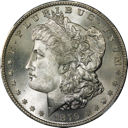
Same coin: 1913 Type 1 Buffalo nickel, graded NGC MS65
More nickels to explore
Sources: Professional Coin Grading Service (PCGS) · Numismatic Guaranty Company (NGC) · American Numismatic Association (ANA) · Coin World
Evidence pages
Related terms
Weak Strike · Wear · Overdate · Die Clash · Counterfeit · Altered Date