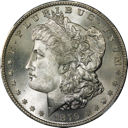
Grading the Jefferson Nickel
The Jefferson nickel, designed by Felix Schlag, has been minted since 1938; most are 75% copper / 25% nickel, but 1942–1945 'War Nickels' contain 35% silver and carry a large mintmark above Monticello. Grading focuses on the steps of Monticello, coins with sharp, complete steps earn the 'Full Steps' designation (PCGS FS, or NGC 5FS/6FS). The series keys are the 1939-D and 1950-D.
Last reviewed: · Free to read · Every claim sourced
New to grading? Start with how to grade a coin, step by step, and the Sheldon 1-70 scale.
At a glance
| Years | 1938–present |
|---|---|
| Designer | Felix Schlag (original); Westward Journey & modern designs by various artists |
| Denomination | Nickels |
| Composition | 1938–1942 & 1946–present: 75% copper / 25% nickel. War nickels (1942–1945): 56% copper / 35% silver / 9% manganese, with a large mintmark above Monticello. |
| Diameter | 21.21 mm |
| Weight | 5.00 g |
| Edge | Plain |
| Mints | Philadelphia (no mark pre-1942 & 1946–1979; P on war nickels and from 1980), Denver (D), San Francisco (S, circulation strikes 1938–1954 & 1968–1970; proofs since 1968) |
Major subtypes
| Subtype | Years |
|---|---|
| Original design (Schlag) | 1938–2003 (incl. 1942–1945 wartime silver) |
| Westward Journey | 2004–2005 (Peace Medal, Keelboat, Bison, Ocean in View) |
| Return to Monticello (forward-facing portrait) | 2006–present |
Where wear shows first
- Jefferson's cheekbone and high hair/eyebrow (obverse)
- The steps and triangular portico/roof line of Monticello (reverse)
Other points to check
- Jefferson's collar and the back of the hair
- Monticello's dome, windows, and pillars
Common weak-strike areas
- The steps of Monticello (fine horizontal lines at the highest relief, deepest die cavity), frequently weak
- Central pillars/portico detail of Monticello
Strike designations
Full Steps: PCGS uses a single 'FS' label (MS60+ with at least five complete, uninterrupted steps on Monticello). NGC splits it into 5FS (five complete steps) and the much rarer 6FS (all six). Assigned automatically; it does not change the numeric grade.
Grading circulated coins
Good (G-4): Jefferson and Monticello survive as bold outlines; the hair is a smooth mass, the building's steps are gone, and its columns fade into the facade, though rims and legends are complete. Very Good (VG-8): a few thick hair strands return at the front and the porch columns become individually distinguishable. Fine (F-12): the cheekbone is worn flat but clearly separated from the jaw, hair shows separation at the top, and Monticello's triangular portico pediment is fully outlined. Very Fine (VF-20): light wear on the cheekbone and ponytail, hair detail behind the ear, and bold columns with the doorway arch visible. Extremely Fine (EF-40): only slight wear on the cheekbone and the high waves of hair, the portico triangle is crisp, and traces of the lower steps may show. About Uncirculated (AU-50): a whisper of friction on the cheekbone and hair high points with luster nearly complete. Caveat: Jefferson nickels are among the worst-struck U.S. coins. Mushy steps, soft columns, and a flat cheekbone on a fully lustrous coin are strike weakness, not wear (endemic on 1950s-60s issues), which is exactly why the Full Steps designation is a strike test, not a wear test.
Grading Mint State coins
Most business strikes show weak or incomplete steps as struck; grade-limiting marks fall on the cheek and the open obverse field. Full Steps is a strike (not wear) characteristic, gems exist both with and without Full Steps, and the designation does not change the numeric grade.
Proof grading
Proofs are graded for mirror fields and frost with Cameo and Deep/Ultra Cameo designations; the Full Steps designation is for Mint State business strikes, not proofs.
Key dates
- 1939-D (~3.5M)
- 1950-D (~2.6M, the two lowest-mintage circulation issues)
Semi-key dates
- 1938-D, 1938-S, 1939-S, 1942-D
Major varieties
- 1943/2-P overdate (the only Jefferson overdate)
- 1943-P Doubled Die Obverse
- 1945-P Doubled Die Reverse
- 1939 Doubled Monticello
- Overmintmarks 1949-D/S, 1954-S/D, 1955-D/S
- 1971 No-S proof
Common problems
- Weak/incomplete steps (as struck)
- Cleaning / whizzing
- Spotting (war nickels take a greenish cast when worn)
- Contact marks on the cheek/field
Signs of cleaning or damage
- Hairlines
- Unnatural brightness
- Disturbed luster
Toning
War nickels (35% silver) are lustrous silver-white when new and take a greenish cast when worn; copper-nickel issues can tone golden or iridescent.
Counterfeit & alteration risks
- Added/altered mintmarks on key dates
- Faked overdate/DDO and 1971 No-S proofs
- Altered war-nickel mintmarks
For the advanced grader
The Monticello steps sit at the highest relief and deepest die cavity, so weak strikes are the norm and Full Steps coins are scarce; the designation reflects strike quality only and never alters the numeric grade. PCGS FS requires at least five complete steps at MS60+; NGC splits this into 5FS and the much rarer 6FS. Marquee varieties include the 1943/2-P overdate (the only Jefferson overdate), the 1943-P and 1945-P doubled dies, the 1939 Doubled Monticello, and the postwar overmintmarks.
Photographic examples
Click any image to enlarge and zoom. Where shown, obverse, reverse, and edge views are of the same coin and year.
More nickels to explore
Sources: Professional Coin Grading Service (PCGS) · Numismatic Guaranty Company (NGC) · United States Mint
Evidence pages
Related terms
Weak Strike · Overdate · Doubled Die · Repunched Mintmark (RPM) · Mintmark · Toning